05/06/2026
Cancer location determines how testosterone regulates tumor growth

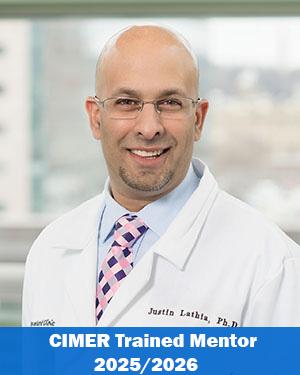
Scientists have long suspected that androgens, male sex hormones like testosterone, may help tumors grow because the hormones can suppress immune responses to some cancers. New research from the lab of Justin Lathia, PhD, provides a different viewpoint: testosterone helps slow the growth of glioblastoma in men.
The article, published in Nature, observes that blocking testosterone makes tumors grow faster—which aligns with trends observed in male glioblastoma patients. Along with changing the narrative around the inclusion of testosterone in cancer treatment, the findings highlight that when it comes to therapeutics, tumor location is a crucial factor.
Challenging common knowledge
It is fairly well-known that glioblastoma tumors are more common and more aggressive in males than females. Though direct links have not yet been established, the two main, suspected reasons for the more frequent occurrence and severity in males are sex chromosomes (the X and Y combination that determines a person’s biological sex) and sex hormones (like estrogen and testosterone).
The research team, led by Juyeun Lee, DVM, PhD, first author of the paper and a former research associate in the Lathia Lab, began their work with a key question: Do male hormones help or hurt the body’s ability to fight brain tumors?
“There are other findings on non-brain tumors that show that testosterone is basically the bad guy, suppressing the immune response and making the tumor grow faster,” says Dr. Lee, who is now Assistant Staff at Cleveland Clinic’s Florida Research & Innovation Center. “This has been shown in multiple cancers, like lung and bladder cancer and melanoma. We wanted to know if the same result would occur in glioblastoma.”
More than ‘local tumor biology’
Preclinical research from the Lathia Lab showed that when testosterone was removed or blocked, a chain reaction occurred:
- Loss of testosterone triggered stress hormones
- Stress hormones suppressed immune cells
- Brain inflammation drove this process
- Immune suppression provided an environment that permitted tumor growth
Drs. Lathia and Lee attribute this chain reaction to the brain’s immune cells, or microglia. Normally, testosterone keeps microglia in check. Without it, microglia trigger inflammation that directly affects the hypothalamic-pituitary-adrenal (HPA) axis and triggers a body-wide stress response that weakens the immune system. That weakened immune system eventually leads to tumor growth.
“In cancers outside of the brain, blocking androgens can improve immunity,” Dr. Lathia says. “This is the opposite of what we discovered in this study—and the implications are that this is more than just local tumor biology, since the effects spread to distant brain regions, including the hypothalamus. The location of a tumor significantly changes how hormones affect immunity.”
Frontiers in cancer neuroscience research
The preclinical observations from the Lathia Lab align with human evidence. The team observed that T cells—which are critical for fighting cancer cells—decline with age, but only in males. This T-cell reduction in male tumors could be the result of aging-associated hormone changes—and is what led the team to look more closely at testosterone.
In addition, the team noted from an analysis of cancer registry data that male glioblastoma patients who received testosterone therapy along with standard chemotherapy lived longer, on average.
“What excites me about our findings is the new insight we are contributing to the growing field of cancer neuroscience,” Dr. Lathia says. “This study looks beyond the tumor at the interaction with the nervous system, in addition to the immune system.”
“We see so much potential for the future of glioblastoma treatment,” he adds. “Our ultimate assertion is that supplemental testosterone could be evaluated as a therapy, marking an important opportunity to advance our fight against cancer.”
Concluding note
In addition to the team members in the Lathia Lab who contributed to this article, Drs. Lathia and Lee would like to credit their co-authors from the following institutions:
- Desai Sethi Urology Institute and Sylvester Comprehensive Cancer Center (Miami, Florida)
- Rose Ella Burkhardt Brain Tumor Center, Case Comprehensive Cancer Center, Departments of Pathology, Neurosciences and Inflammation & Immunity (Cleveland Clinic)—including Nikhil Panicker, PhD, whose lab contributed images
- Case Western Reserve University (Cleveland, Ohio)
- Translational Genomics Research Institute (Phoenix, Arizona)
- The Bartholin Institute in the Department of Pathology and the Department of Clinical Medicine and Biotech Research and Innovation Centre (Copenhagen, Denmark)
- Cedars-Sinai (California)
- Duke University School of Medicine (Durham, North Carolina)
- Washington University School of Medicine (St. Louis, Missouri)