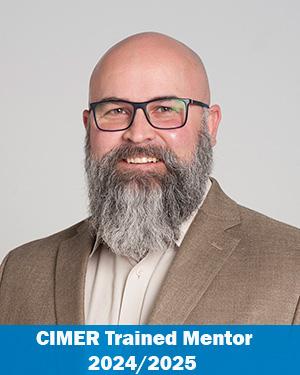
J. Mark Brown, PhD
Staff
Director of Research, Center for Microbiome & Human Health
Email: [email protected]
Location: Cleveland Clinic Main Campus
Research
The long-term goal of my laboratory is to understand the fundamental pathways that dictate how our bodies make, store, and degrade fats or lipids. Most chronic diseases that we are faced with today like coronary heart disease, obesity, diabetes, cancer, and even infectious disease are driven by underlying disruption in lipid metabolism. Our research is focused on understanding how lipids are metabolized at the cellular and systemic level, so that we can effectively balance lipid flux for optimal health. Although poorly understood, we are particularly interested in metaorganismal lipid metabolism, which involves metabolic crosstalk between bacterial living in our gut and our own human cells. Our research is at the forefront of understanding how metaorganismal lipid metabolism can powerfully impact acute and chronic inflammatory responses that underlie many diseases. All of our projects aim to translate basic discoveries in lipid biochemistry and physiology into new therapeutic regimens for cardiometabolic disease.
Biography
Dr. J. Mark Brown, Ph.D. is a Full Staff / Full Professor in the Department of Microbial Sciences in Health at the Cleveland Clinic. Dr. Brown is also the Director of Research in the Center for Microbiome & Human Health at the Cleveland Clinic. Dr. Brown completed his undergraduate and doctoral training in the area adipocyte biology and nutrition at the University of North Carolina at Greensboro in 2004, and completed his postdoctoral training in animal models of atherosclerosis and lipoprotein metabolism at Wake Forest University under the mentorship of Dr. Lawrence L. Rudel in 2009. Since then, Dr. Brown’s research program has focused on the interrelationship between abnormal lipid metabolism and the development of chronic metabolic diseases such as obesity, type II diabetes, cardiovascular disease, and gastrointestinal cancers.
Dr. Brown’s laboratory has spearheaded NIH funded research programs surrounding mechanisms by which gut microbial metabolites promote cardiovascular and alcoholic and non-alcoholic liver disease. Another major focus of Dr. Brown’s research program surrounds functional characterization of human genetic variants associated with obesity and fatty liver disease. Dr. Brown has received several prestigious awards from the American Society of Nutrition, the American Heart Association, and other foundations. He has currently published over 180 manuscripts in high impact journals such as Cell, Cell Metabolism, Cell Reports, Nature Medicine, Cancer Discovery, Proceedings of the National Academy of Science, Elife, among others. He has served as a standing member of the Nutrition and Metabolism in Health and Disease (NMHD) and Integrative Nutrition and Metabolic Processes (INMP) study sections at the NIH. Dr. Brown has a passion for collaboration, working together with many teams to advance nutrition and metabolism research at the NIH and locally in the Northeast Ohio region.
Education & Professional Highlights
Appointed
2013
Education & Fellowships
Fellowship - Wake Forest University Bowman Gray School of Medicine
Lipid Atherosclerosis
Winston-Salem, NC USA
2009
Graduate Education - University of North Carolina at Greensboro
Cellular & Molecular Nutrition
Greensboro, NC USA
2004
Undergraduate - University of North Carolina at Greensboro
Nutrition/Diabetes
Greensboro, NC USA
2000
Awards (selected)
- 2007 Recipient of the Peter J. Reeds Memorial Young Investigator Award; American Society for Nutrition
- 2011 Finalist for the Irvine H. Page Young Investigator Award of the American Heart Association (AHA).
- 2012 Recipient of the David L. Williams Lecture and Scholarship Award.
- 2017 Recipient of the E.L.R. Stokstad Award; American Society of Nutrition.
- 2022 Mentor the Year Award - Cleveland Clinic Research
- 2026 Chair - 2026 Lipoprotein Metabolism Gordon Research Conference
Research
My research is focused on the interrelationship between the diets we eat, microbe and host metabolism, and the development of chronic disease. We have three active research programs, and we are always looking for highly motivated young scientists to participate in our multidisciplinary training program.
Research Focus 1) Metaorganismal Endocrinology: Gut Microbe-Derived Hormones in Human Health & Disease.
Microbes resident in the human intestine represent a key transmissible factor contributing to a wide variety of human diseases. Here we are studying how gut microbes generate an array of small molecule and lipid metabolites that impact host physiology and disease. This line of investigation is studying the role of diet-microbe-host interactions in the context of obesity, diabetes, cardiovascular disease, and cancer. We have particular interest in metaorganismal lipid metabolism, where bacterial residing in our gut collaborate with our human cells to generate signaling and structural lipids that powerfully shape inflammatory processes throughout the body. Here, we are also studying how gut microbial metabolites impact the production of the incretin hormone glucagon-like peptide 1 (GLP-1), and how GLP-1 receptor agonist drugs restructure gut microbial metabolism to improve metabolic health.
Research Focus 2) Diet and Gene Interactions Driving the Progression of Metabolic Dysfunction Steatotic Liver Disease (MASLD) & Alcohol-Associated Liver Disease (ALD).
The progression of ALD and MASLD to advanced fibrosis and end stage liver disease is driven by a combination of dietary and genetic factors. Here we are studying the interaction between metaorganismal nutrient metabolism (i.e. microbe and host co-metabolism) and host genetics (i.e. common and rare genetic variants), with the hopes of identifying new therapeutic strategies for those suffering from advanced liver disease. Studies in this area are identifying innovative precision nutrition and microbiome-targeted therapeutic strategies to improve outcomes in ALD and MASLD.
Research Focus 3)
Mechanisms by Which Processed Foods & Obesity Drive Gastrointestinal (GI) Cancers. Several common malignancies are associated with poor nutrition and obesity, particularly GI malignancies. In this series of projects, we are studying how metaorganismal nutrient metabolism of processed foods impacts obesity, and how this can be mechanistically tied to malignancies in the gut, liver, and kidneys. This series of projects is focused on identifying novel dietary or gut microbiome-focused therapeutic strategies that can improve outcomes in those suffering from GI cancers.
Our Team
Selected Publications
View publications for J. Mark Brown, PhD
(Disclaimer: This search is powered by PubMed, a service of the U.S. National Library of Medicine. PubMed is a third-party website with no affiliation with Cleveland Clinic.)
1)?Temel, et al.?(2010) Biliary sterol secretion is not required for macrophage reverse cholesterol transport.?Cell Metab. 12(1): 96-102.
2)?Lord, C.C., et al.?(2012) CGI-58/ABHD5-derived signaling lipids regulate systemic inflammation and insulin action.?Diabetes??61(2): 355-363.
3)?Koeth, R.A., et al.?(2013) Intestinal microbiota metabolism of l-carnitine, a nutrient in red?meat, promotes atherosclerosis. Nat. Med. 19(5): 576-585.
4) Thomas, G., et al. (2013) The serine hydrolase ABHD6 is a critical regulator of the metabolic syndrome. Cell Rep. 5(2): 508-520.
5) Warrier, M., et al. (2015) The TMAO-generating enzyme flavin monooxygenase 3 is a central regulator of cholesterol balance. Cell Rep.?10: 1-13.
6) Zhu, W., et al. (2016) Gut microbial metabolite TMAO enhances platelet hyperreactivity and thrombosis risk. Cell 165: 111-124.
7) Lord, C.C., et al. (2016) Regulation of hepatic triacylglycerol metabolism by CGI-58 does not require ATGL co-activation. Cell Rep. 16, 939-949.
8) Schugar, R., et al. (2017) The TMAO-producing enzyme flavin-containing monooxygenase 3 regulates obesity and the beiging of what adipose tissue. Cell Rep. 19, 2451-2461.
9) Gromovsky, et al. (2017) Δ-5 fatty acid desaturase FADS1 impacts metabolic disease by balancing pro-inflammatory and pro-resolving lipid mediators. Arterioscler. Thromb. Vasc. Biol. 38(1): 218-231.
10) Helsley, R.N., et al. (2019) Obesity-linked suppression of membrane-bound O-acyltransferase 7 (MBOAT7) drives non-alcoholic fatty liver disease progression. Elife e49882.
11) Osborn, L.J., et al. (2022) A gut microbial metabolite of dietary polyphenols reverses obesity-driven hepatic steatosis. Proc. Natl. Acad. Sci. USA 119(48): e2202934119.
12) Helsley, R.N., et al. (2022) Gut microbial trimethylamine is elevated in alcohol-associated hepatitis and contributes to ethanol-induced liver injury. Elife e76554.
13) Wang, M., et al. (2023) Strain dropout reveal interactions that govern the metabolic output of the gut microbiome. Cell 186(13): 2839-2852.
14) Mahen, K.K., et al. (2026) Gut microbe-derived trimethylamine shapes circadian rhythms through the host receptor TAAR5. Elife RP107037.
15) Dutta, S., et al. (2026) Gut microbe-derived N-acyl serinol lipids shape host postprandial metabolic homeostasis. Proc. Natl. Acad. Sci. USA 123(12): e2517314123.
Careers
Research News

From playing baseball to receiving a new grant, teams, mentorship and persistence have underscored his journey.

Mentorship, opportunity and personal drive helped guide Kala Mahen’s path as a Cleveland Clinic Research scientist.

New research shows many gut bacteria make a class of molecules that alter our hormones—including GLP-1 and insulin—after meals, supporting potential “GLP-1 probiotics."

Machine learning crunches the numbers to more easily spot drug targets for diseases influenced by the gut microbiome.

The fellowship aims to nurture and develop early-career scientists.

Using pharmacological and genetic approaches, Dr. Brown found that silencing the gene MBOAT7 drove the development of non-alcoholic fatty liver disease in models fed a high-fat diet, and that obesity may contribute to this process by naturally suppressing MBOAT7 expression.

The grant will explore the critical link between microbial pathways and the development of cardio-metabolic diseases.