Research
The Ni Lab studies why people with inherited genetic changes can have very different risks of developing cancer and how those differences can be used to improve prevention and treatment. Our work combines human genetics, genomics, immune profiling, metabolism, and computational biology to identify molecular signals that predict cancer risk and treatment response. PTEN hamartoma tumor syndrome is a major focus and serves as a model for understanding how inherited variation influences cancer, immune function, and other health outcomes. We also develop data-driven precision oncology tools that connect molecular testing with clinical information. Our goal is to translate complex biological data into practical approaches for earlier detection, more individualized cancer prevention, and better treatment decisions.
Biography
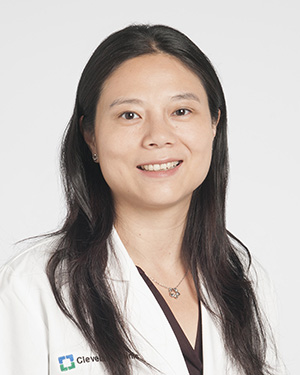
Ying Ni, PhD, is an Assistant Staff member in the Department of Cancer Sciences at Cleveland Clinic Research and an Assistant Professor at Cleveland Clinic Lerner College of Medicine of Case Western Reserve University. She leads Cleveland Clinic’s Precision Oncology Program Cancer Data Science efforts and directs a translational research laboratory focused on hereditary cancer, precision oncology, immunometabolism, and multi-omics cancer data science.
Dr. Ni trained initially in electrical engineering, earning a BS from Communication University of China and an MS from the University of Illinois at Chicago. She subsequently earned a PhD in Molecular Medicine from Case Western Reserve University, where her doctoral work investigated succinate dehydrogenase genes as cancer susceptibility factors in Cowden and Cowden-like syndromes. She completed postdoctoral training in genomic medicine and computational cancer epidemiology at Cleveland Clinic and Case Western Reserve University.
Her research integrates germline and tumor genomics, transcriptomics, metabolomics, immune profiling, clinical data, and computational modeling to understand cancer susceptibility, phenotype variability, and treatment response. A major focus is PTEN hamartoma tumor syndrome, where her laboratory studies genomic, metabolic, and immune modifiers of cancer risk and develops biomarker-based approaches for precision prevention and early detection.
She is a member of AACR, ASHG, AAAS, ISCB, and the Case Comprehensive Cancer Center and is actively engaged in mentoring trainees across career stages.
Education & Professional Highlights
Appointed
2021
Education & Fellowships
Postdoctoral Fellowship - Cleveland Clinic, Genomic Medicine Institute
Cleveland, OH USA
2013
Graduate - Case Western Reserve University
Molecular Medicine
Cleveland, OH USA
2012
Graduate - University of Illinois at Chicago
Electrical Engineering
Chicago, IL USA
2003
Undergraduate - Communication University of China
Electrical Engineering
Beijing, China
2000
Awards & Honors
- Doctoral Excellence Award, Case Western Reserve University
- Women in Cancer Research Scholar Award, American Association of Cancer Research
- Outstanding Translational Research, Cleveland Clinic Lerner College of Medicine (CCLCM)
- AAAS/Excellence in Science Program, American Association for the Advancement of Science (AAAS)
Memberships
- International Society for Computational Biology
2015-present - American Association of Cancer Research
2012-present - American Society of Human Genetics
2009-present - The American Association for the Advancement of Science
2008-present
Research
Overview
Why do individuals carrying the same inherited cancer-predisposition variant develop very different diseases, at different ages, or sometimes no cancer at all?
The Ni Lab investigates the molecular factors that shape this variability and translates those discoveries into strategies for precision cancer prevention and treatment. Our research sits at the intersection of hereditary cancer genetics, immunology, metabolism, multi-omics, computational biology, and clinical data science.
We integrate deeply phenotyped patient cohorts and biospecimens with germline and tumor genomics, transcriptomics, metabolomics, immune profiling, single-cell and spatial technologies, and longitudinal clinical data. In addition to studying each molecular layer in isolation, we use systems-level and computational approaches to identify interactions among inherited variation, metabolism, immune state, tumor biology, and environmental or clinical factors.
Our long-term goal is to move hereditary cancer care beyond gene-based risk estimates toward individualized prediction: identifying who is at greatest risk, when that risk emerges, which biological processes drive it, and how those processes can be targeted for prevention, early detection, or treatment.
Hereditary Cancer Predisposition & Precision Prevention
Inherited pathogenic variants establish cancer susceptibility, but genotype alone often does not explain the substantial variation in cancer penetrance, age of onset, tumor spectrum, or treatment outcome observed among carriers.
Our laboratory investigates genetic and molecular modifiers of hereditary cancer risk using family-based cohorts, population-scale genomic resources, electronic health records, tumor sequencing, and multi-omic profiling. Our work has identified and characterized susceptibility genes and modifiers across Cowden and Cowden-like syndromes, PTEN-related disorders, thyroid cancer, melanoma, and broader cancer-predisposition populations.
We are particularly interested in converting these discoveries into precision prevention. Instead of applying uniform surveillance to everyone with a particular germline variant, we aim to develop integrated models incorporating genomic, metabolic, immune, and clinical information to identify individuals at highest risk and ultimately inform the timing and intensity of screening and preventive interventions.
Population-scale resources, including All of Us, complement our clinically ascertained hereditary cancer cohorts and enable us to study penetrance, phenotype spectrum, underdiagnosis, ancestry, and modifier effects in less selected populations.
PTEN Hamartoma Tumor Syndrome: A Model of Phenotypic Divergence
PTEN hamartoma tumor syndrome (PHTS) is a central focus of our research program and provides a unique model for understanding how a single germline cancer-predisposition gene can produce remarkably heterogeneous outcomes.
Individuals with germline PTEN variants may develop breast, thyroid, endometrial, renal, colorectal, and other cancers, while others develop neurodevelopmental phenotypes or remain cancer-free for many years. Our laboratory asks why these divergent clinical trajectories occur.
We integrate whole-genome sequencing, transcriptomics, metabolomics, immune profiling, cell-free DNA, clinical phenotypes, and computational modeling to identify modifiers of cancer and neurodevelopmental outcomes. Our studies have demonstrated roles for additional germline variation, metabolic states, mitochondrial biology, copy-number variation, and circulating molecular features in shaping PHTS phenotypes.
This work builds toward an integrated PTEN precision-risk framework linking: Germline genotype → molecular modifiers → immune and metabolic state → clinical phenotype → individualized surveillance and intervention.
Immunometabolism & Tumor-Immune Biology
Metabolic reprogramming and immune regulation are tightly interconnected processes in cancer. Our laboratory studies this relationship from both hereditary cancer and treatment-response perspectives.
Our early work identified germline alterations in succinate dehydrogenase genes as modifiers of cancer susceptibility and demonstrated mechanistic links among mitochondrial metabolism, altered FAD/NAD balance, oxidative stress, p53 regulation, and tumorigenesis. Subsequent studies in PTEN-associated disease identified distinct metabolic profiles associated with different clinical phenotypes.
We now extend this work to tumor immunology and immunotherapy. By integrating transcriptomics, metabolomics, immune profiling, tumor genomics, and clinical outcomes, we study the biological states associated with response and resistance to immune checkpoint inhibition. Our research has identified immune and TGF-β-associated signatures of immunotherapy outcome and has applied genome-scale metabolic modeling to infer metabolic pathways associated with treatment response.
We are also interested in interactions among the tumor microbiome, metabolism, and anti-tumor immunity. These studies reflect a broader goal of identifying metabolic and immune processes that function both as biomarkers and as potential therapeutic vulnerabilities.
Multi-Omics & Computational Systems Biology
Complex diseases such as cancer emerge from interactions among genes, cells, metabolic pathways, immune responses, tissues, and clinical exposures. No single molecular measurement captures this complexity.
Our laboratory develops and applies computational approaches for integrating:
- Whole-genome and exome sequencing
- Germline and somatic variation
- Bulk transcriptomics
- Single-cell and single-nucleus transcriptomics
- Spatial transcriptomics
- Proteomics
- Metabolomics
- Cell-free DNA
- Immune profiling
- Electronic health record and clinical outcome data
A major methodological interest is genome-scale metabolic modeling. Using transcriptome-constrained metabolic networks and flux balance analysis, we infer pathway-level metabolic activity from high-dimensional molecular data. This enables metabolic phenotyping of large patient cohorts even when direct metabolomic measurements are unavailable.
We combine these approaches with statistical genetics, machine learning, unsupervised molecular subtyping, and predictive modeling to discover biomarkers and generate clinically testable hypotheses.
Across these studies, computation is not simply an analytic endpoint. It is a bridge between molecular mechanism and clinical translation.
Precision Oncology & Cancer Data Science
Cancer genomic testing has generated an extraordinary volume of molecular information, but translating that information into treatment decisions remains challenging.
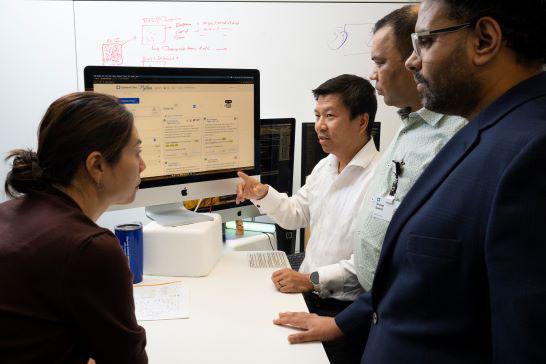
The Ni Lab works at the interface of cancer genomics and clinical data science to develop scalable approaches for precision oncology. We integrate tumor sequencing with longitudinal clinical data, treatment history, outcomes, biomarkers, and external knowledge resources to support translational research and clinical decision-making.
Our work spans cancer genomic data infrastructure, cBioPortal-based exploration, clinical cohort discovery, trial matching, computational biomarker development, and AI-supported precision oncology. These efforts allow us to study treatment response in real-world patient populations while also developing tools that make complex genomic information more accessible to clinicians and investigators.
By connecting molecular discovery with clinical informatics, our goal is to develop precision oncology approaches that can ultimately help match the right prevention, surveillance, or treatment strategy to the right patient.
Our Team
Selected Publications
View publications for Ying Ni, PhD
(Disclaimer: This search is powered by PubMed, a service of the U.S. National Library of Medicine. PubMed is a third-party website with no affiliation with Cleveland Clinic.)
-
Ni Y, Zbuk KM, Sadler T, Patocs A, Lobo G, Edelman E, et al. Germline mutations and variants in the succinate dehydrogenase genes in Cowden and Cowden-like syndromes. Am J Hum Genet. 2008;83(2):261-268.
-
Ni Y, He X, Chen J, Moline J, Mester J, Orloff MS, Ringel MD, Eng C. Germline SDHx variants modify breast and thyroid cancer risks in Cowden and Cowden-like syndrome via FAD/NAD-dependent destabilization of p53. Hum Mol Genet. 2012;21(2):300-310.
-
Yehia L*, Ni Y*, Niazi F, Sesock K, Chen J, Eng C. Unexpected cancer-predisposition gene variants in Cowden syndrome and Bannayan-Riley-Ruvalcaba syndrome patients without underlying germline PTEN mutations. PLoS Genet. 2018;14(4).
-
Yehia L*, Ni Y*, Feng F, Seyfi M, Sadler T, Frazier TW, Eng C. Distinct alterations in tricarboxylic acid cycle metabolites are associated with cancer and autism phenotypes in Cowden syndrome and Bannayan-Riley-Ruvalcaba syndrome. Am J Hum Genet. 2019;105(4):813-821.
-
Ni Y, Soliman A, Joehlin-Price A, Rose PG, Vlad A, Edwards R, Mahdi H. High TGF-β signature predicts immunotherapy resistance in gynecologic cancer patients treated with immune checkpoint inhibition. NPJ Precis Oncol. 2021;5(1):101.
-
Liu D, Yehia L, Dhawan A, Ni Y, Eng C. Cell-free DNA fragmentomics and second malignant neoplasm risk in patients with PTEN hamartoma tumor syndrome. Cell Rep Med. 2024;5(2):101384.
-
Yehia L, Plitt G, Tushar AM, Liu D, Joo J, Ni Y, Patil S, Eng C. Extended spectrum of cancers in PTEN hamartoma tumor syndrome. NPJ Precis Oncol. 2025;9(1):61.
-
Idumah G*, Newell D*, Hadrys M, Ribaudo I, Ni Y#, Arbesman J#. Pathogenic germline variants in cancer susceptibility genes. JAMA. 2025;334(19):1765-1768.
-
Idumah G, Li L, Yehia L, Mahdi H, Ni Y#. Metabolic signatures of immune checkpoint inhibitor response in gynecologic cancers: insights from flux balance analysis. Comput Biol Med. 2026;200:111366.
-
Yehia L*, Li L*, Idumah G, Frazier TW, Makarov V, Bose A, et al, Ni Y#. Genomic modifiers of malignant and neurodevelopmental phenotypes in individuals with PTEN hamartoma tumor syndrome. NPJ Genom Med. 2026;11(1):25.
*Co-first author. #Corresponding/co-corresponding author.
Careers
Join the Ni Lab
The Ni Lab brings together human genetics, cancer biology, immunology, metabolism, computational biology, and clinical data science to address a central question in precision medicine: why do patients with similar genetic risks or diagnoses experience different outcomes, and how can we use those differences to improve prevention and treatment?
We are committed to a collaborative, multidisciplinary training environment where computational and experimental approaches inform one another and where discoveries are connected to clinically meaningful questions.
Trainees may work with genomic, transcriptomic, single-cell and spatial, metabolomic, immune, and clinical datasets from hereditary cancer and precision oncology studies. Projects range from fundamental questions about genetic and molecular mechanisms to biomarker development, machine learning, systems biology, and translational clinical applications.
We welcome trainees from diverse scientific backgrounds, including genetics and genomics, bioinformatics, computational biology, statistics, engineering, immunology, cancer biology, and data science. Prior experience in every area is not expected; intellectual curiosity, scientific rigor, collaboration, and enthusiasm for learning across disciplines are especially valued.
The lab has a strong commitment to mentorship and works with postdoctoral fellows, graduate and medical students, undergraduate students, and other research trainees. Our goal is to help each trainee develop scientific independence, quantitative and communication skills, collaborative experience, and a research direction aligned with their long-term career goals.
Current formal openings are listed through the Cleveland Clinic careers website.
Research News

Staphylococcus (“staph”) bacteria decrease breast tumors by recruiting immune cells and suppressing cancer metabolism, which opens the door to microbiome-targeted therapies.

Combining metabolomics and genomics helps identify patients who benefit from immune checkpoint inhibitors for gynecologic cancer.

A genetic study from Cleveland Clinic finds potential hidden cancer risks in 5% of Americans, suggesting genetic testing for cancer should go beyond high-risk groups.

Up to one in seven melanoma patients are genetically predisposed to the cancer, suggesting inherited genetics may be a bigger risk factor than sun exposure in some cases.